
Coaching does not stop where speech ends: supporting a non-speaking autistic client


Written by Satu Väänänen
Neuropsychiatric coaching is built on strengths, practical everyday solutions and structure. What happens when the client does not speak at all? Many coaches believe that closes the door completely. It does not.
A word on the Finnish context.
In Finland, neuropsychiatric coaching ("nepsy coaching") is an established profession: a solution-focused, goal-oriented form of support for people with ADHD, autism and related conditions, close to what is known elsewhere as ADHD coaching or neurodiversity coaching. It is bought by families, municipalities and the social insurance system, and coaches are trained through their own certification programmes. When I trained as a coach, we were told on the first day that this method is not meant for non-speaking people. I disagreed, and I built my entire final project on how it can be used with them.
This article is that argument, written for coaches and for anyone who supports a non-speaking autistic person and wonders whether coaching-style work has anything to offer.
I have lived everyday life with profound autism as a mother for years, around the clock, and alongside that I have worked as a psychiatric nurse and in child welfare. In those years I have learned that the core idea of coaching, supporting the structure of everyday life, building on strengths and shaping the environment to fit the person, works remarkably well with non-speaking autistic people too. It only needs slightly different tools, and the courage to begin.
Who is a non-speaking person with profound autism?
A non-speaking person is someone who cannot express themselves through spoken language. They communicate in other ways: pictures, signs, communication devices or other AAC methods. Body language, vocalisations and behaviour are often central channels of communication as well.
Non-speaking autistic people usually have wide-ranging difficulties with executive function, sensory regulation and expressing emotion. In adolescence and early adulthood, hormonal changes, transitions to new environments and the ending of therapies can bring entirely new challenges to the surface, precisely at the moment when professional support is most valuable.
Not speaking does not mean not understanding. These people often understand far more of their surroundings than a superficial glance suggests.
It is also important to remember that there is no such thing as a typical non-speaking autistic person. Each one is an individual with their own ways of doing things, their own preferences and their own strengths. That individuality has to be respected in everything we do.

Why coaching suits this group
The strength of coaching is that it is tied to everyday life rather than to a diagnosis. It does not repair neurology. It builds a bridge between the client and their daily life, and that bridge is needed just as much whether the client speaks or not.
A non-speaking autistic teenager or young adult needs, at this stage of life in particular, support in transitions (school to adulthood, home to supported living, a familiar assistant to a new one), maintenance and strengthening of everyday structures in new environments, network work that brings every party onto the same page, guidance and support for parents and the close circle, and a mapping of strengths so they can be used in rehabilitation.
In Finland, publicly funded rehabilitation often ends around puberty, even though the need continues throughout life. The same pattern exists in many countries under different names. That is exactly the gap a coach can fill: as a structurer of daily life, a support for the family and a professional who links the different parties together, alongside therapists rather than in place of them.
The coach comes to the house: how to begin
The first and most important thing is to remember who the real expert is: the family and the close circle, who have lived beside this autistic person for years or decades. They know what works and what does not. Your job is to help find the wisdom that already exists in the family and make it visible.
At the start it is worth going through what the biggest everyday challenges are right now; what has already been tried, what worked and what did not; how the client communicates and what they understand; what their strengths and interests are; and how the different environments (home, school, supported living) can commit to shared ways of working.
New approaches must not add weight to a daily life that is already heavy. Every idea has to blend into the existing routine, or it will not be used.

Communication: the first key
With a non-speaking client, understanding communication is fundamental. The coach has to find out how the client communicates and be able to use pictures to support their own speech. If the client uses signs, the coach learns them too.
When you speak to an autistic young person or adult, speak to them as you would to anyone, while avoiding long sentences and abstract expressions. Pictures can support what you say: what we are doing now, when our time together ends, what happens next.
Remember this: autistic people often understand much more speech than it appears. Never talk about the person in the third person within their hearing as if they were not there.
Long-standing family members and familiar staff can act as the client's "voice", complementing their own communication. They hold irreplaceable knowledge of what particular signals and patterns of behaviour mean.

Structure and executive function: the foundation of stability
Structure is the cornerstone of autism support and coaching. It brings safety, reduces anxiety and creates the predictability that is vital for a non-speaking autistic person.
A coach can assess the client's everyday environment by asking: is the daily schedule visible in pictures? Are there visual prompts for transitions? Do the days contain enough meaningful guided activity and enough rest? Is the environment sensory-heavy?
Practical tools include visual daily schedules, first-then-after picture cards, time-management aids and digital calendars in which days can be illustrated far ahead. These are familiar coaching methods, and they work with non-speaking people too, as long as they are adapted to the individual.
Sensory issues cannot be bypassed
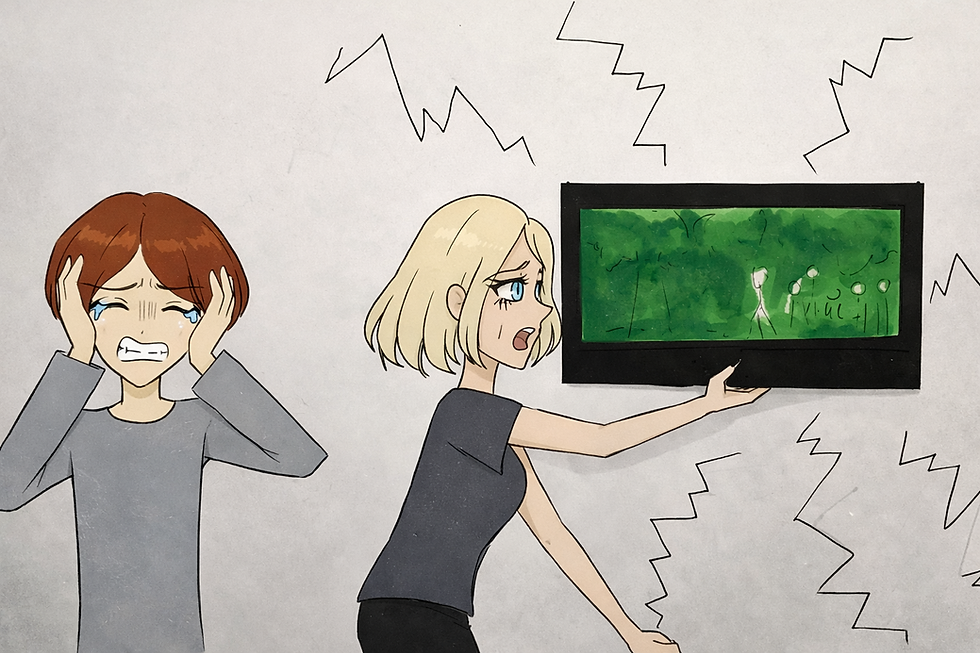
Non-speaking autistic people very often have severe difficulties with sensory regulation. Sensory overload can show in behaviour in ways that do not look like a sensory problem at all at first glance. Stuck or challenging behaviour often cannot be changed until the sensory side has been brought into some kind of balance.
The coach does not need to be a sensory integration therapist or a sensory expert. But taking the sensory theme into account is essential, and consultation can always be requested from other professionals. Combining your own observation, the family's experience and the available research has already achieved a great deal in situations where specialist therapy was not available.
A simple step can already be a big one: building a sensory-friendly calm space, adding daily sensory activities to the schedule, or reducing noise in the environment.
Challenging behaviour: what does it really mean?
With non-speaking autistic people, challenging behaviour is usually what exhausts the environment most. It can be aggression, self-injury, compulsive habits or actions the surroundings do not understand.
The coach needs to remember: challenging behaviour is almost always a message. It tells us that the person is not being understood or does not understand, that the environment is not meeting their needs, or that they have no other way to express how they feel.
Challenging behaviour very often equals an everyday life without visual support and structure, and untreated sensory problems.
One method is rarely enough. More structure, attention to the senses, teaching alternative ways of acting and a shared approach across the whole network are all needed. Even stronger use of pictures and more precise structuring of the days can be the decisive step in the right direction.
And it is always worth checking whether there is a somatic cause, pain or illness, that does not otherwise come to light because the person cannot say it in words.
Strengths: the ground coaching grows in
Every autistic person has strengths. One has an exceptional memory, another a passion for music or visual art, another a particular interest that can be put to use. Strengths are the soil in which coaching is planted.
Experiences of success matter especially to a non-speaking autistic person. They are often used to failing, and their willingness to try new things wakes up best when learning feels safe and rewarding.
Network work is essential
Perhaps the hardest task in coaching this group is getting every environment, home, school, supported living, assistants, to act consistently in the same way. A non-speaking autistic person learns from routine and repetition, and even a small inconsistency between the different parties can undo progress that took a long time to build.
The coach has an important role in finding a shared direction: a clear plan, agreed methods and knowledge of who does what and when. Bringing the network together, building a common understanding of the client and committing to the same methods is the heart of the work.

You can do this work
The non-speaking person with profound autism is the client group that needs professional support most, and gets it least. Therapies end, assistants change, supported living homes lack specialist knowledge. There is room.
As a coach you already have much of the competence this requires: the ability to structure everyday life, a strengths-based way of thinking, network skills and methods that also work through pictures. On top of that comes a real interest in learning about this client: their ways, their needs and what works for them.
Experience teaches. Nobody starts as an expert, but starting is itself the decisive thing. A family that has waited years for someone who dares to come alongside deserves it.
A good starting point is this: place yourself, in your mind, inside the autistic person. How do they experience things? What do they understand? How does it feel when others talk about them in the third person and all they can do is listen? That empathy is the most important tool you have.
Further reading
Melanie Nind and Dave Hewett: Access to Communication (Intensive Interaction).
A. Jean Ayres: Sensory Integration and the Child. Carol Gray: The New Social Story Book.
Gary Mesibov, Victoria Shea and Eric Schopler: The TEACCH Approach to Autism Spectrum Disorders.
Satu Väänänen is a psychiatric nurse, neuropsychiatric coach and specialist in profound autism, with more than 15 years of first-hand experience of everyday life with a profoundly autistic person. She provides training for professionals on profound autism in Finland and internationally, and publishes guides and practical tools in Finnish and English at lainatturauha.com/en.
Lainattu Rauha® · Borrowed Peace


Comments